Codex's Auto Review has a read-only agent judge sandbox escalations against the user's ask
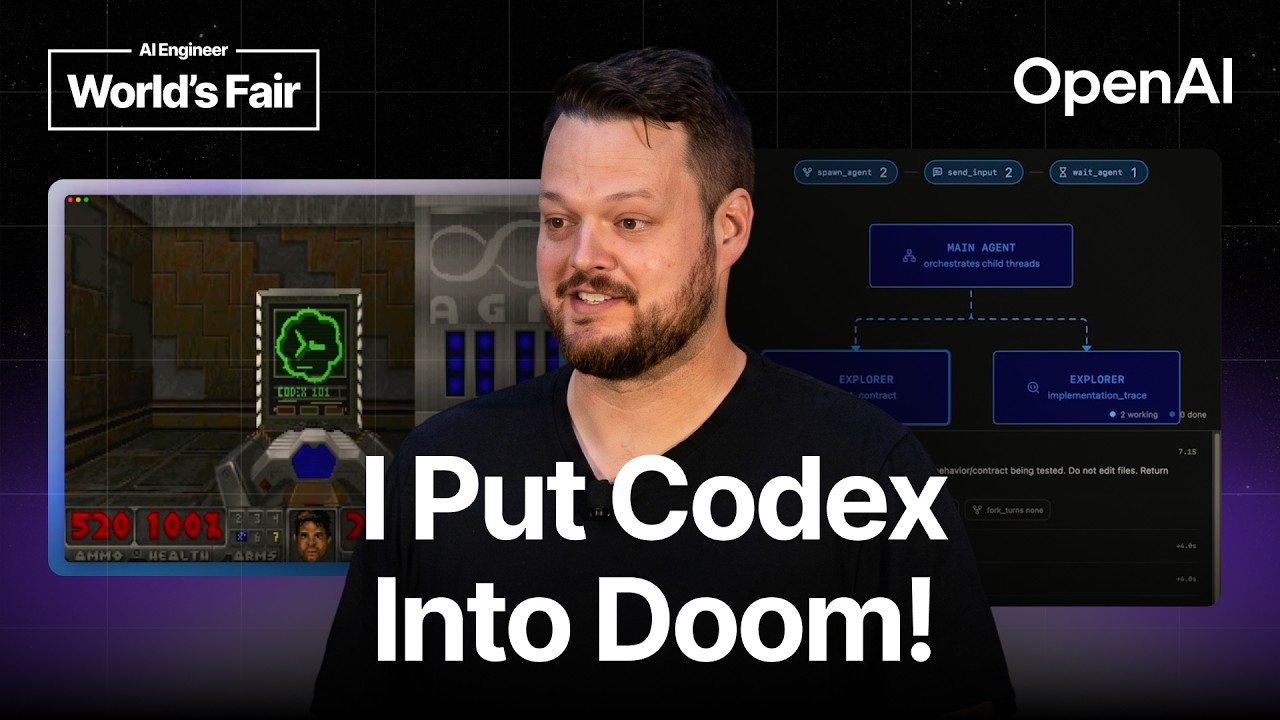
Dominik Kundel (OpenAI) describes Auto Review in the Codex harness: when the agent wants to leave its sandbox, a separate read-only sub-agent judges the request against what the user authorised, instead of asking the user or allowing everything.
 Watch from 11:34
Recording by AI Engineer.
The idea
The speaker’s argument, in our words.Kundel frames Auto Review as a middle ground between approval fatigue and full access. Even good models, pushed to act with high agency, can do things the user did not expect: upload a file to a share because it could not be attached to an email, or delete too much after an escaping mistake. In Codex, when an action hits the sandbox boundary and the model asks to escalate, the harness starts a reviewer sub-agent that runs separately, has read-only permissions and cannot start other agents.
The reviewer gets guidance on user authorisation and a risk taxonomy, plus the transcript and the tool calls, because the same action can be right or wrong depending on context: deleting a .git folder is fine if the user asked for it. It returns a judgement of authorisation, impact and decision. Kundel says data exfiltration is kept outside what gets auto-approved, and that the same check covers network calls.
What they found
From the talk. Figures are self-reported unless stated.On escalation, Codex starts an Auto Review sub-agent that runs separately, has read-only permissions and cannot spawn other agents.
OpenAI describing its own harness; he calls the description a gross oversimplification and points to a blog post.
Case study
13:26The reviewer receives the transcript and the tool calls, because whether an action is acceptable depends on what the user asked for.
Example given: deleting a .git folder is fine only if the user requested it.
Case study
14:10The reviewer rates user authorisation and impact and decides; the same applies to network calls, where checking connectivity is fine and uploading a file may not be.
Shown in a demo on a file deletion; no rates of correct or wrong approvals given.
Case study
14:56
Why it matters
Our reading. Not said in the talk.Anthropic ships a comparable gate in Claude Code's auto mode, and Lydia Hallie (Anthropic, separate talk) gave the number this talk lacks: in an Anthropic study, auto mode blocked 89% of clearly dangerous commands, where people caught about 14%, and about one in ten still went through. Her conclusion was to keep deny rules, checked before the classifier, for anything that must never happen. Codex points the same way by keeping data exfiltration outside what Auto Review can approve. Neither talk says how often the reviewer gets ordinary, ambiguous requests wrong.
What one could try
- If you grant agents full access to avoid approval prompts, consider a separate reviewer with read-only tools that sees the user's request and the pending call.
- Keep a short list of actions (exfiltration, destructive changes outside the workspace) that no automatic reviewer can approve.
Limitations
- No data on false approvals or false blocks.
- OpenAI describing its own product; the full design is in a blog post not reviewed here.
- A reviewer that reads the transcript can be influenced by the same prompt injection as the agent; the talk does not address this.
Original sources
AI Engineer World's Fair 2026 · Aug 10, 2026
Codex, Behind the Harness
Dominik Kundel · OpenAI · 21 min
This is our synthesis of the talk, checked against the transcript at the linked moments.