Uber, Harvey, Duolingo and Anthropic saw agent output pile up in merging, CI and triage
Four teams describe the slow step moving past writing once agent output grew. Uber and Harvey saw it in merge queues, Duolingo in its own agent's backlog of PRs, and Anthropic's Eugene Yan in security findings waiting for triage and patches. Our synthesis.
The cases
As each talk reports it.UberPreetam Dwivedi, Manjari Akella
- Where it showed
- Merge queue of the Go monorepo
- What they measured
- About 90 to 130 requests an hour (Jan to Mar 2026); p95 land time from about 30 min to 3–4 h
- Response
- Admission gating at peak; dropping weak conflict links; a verified pointer after landing
- Trade-off
- Some combinations land untested; library owners wait for off-peak hours
HarveyJoey Wang
- Where it showed
- Company-wide merge queue
- What they measured
- PRs up about 60% in one month; merges from 15–30 min to over an hour
- Response
- Not solved; the queue was switched off at times
- Trade-off
- Not attributed to agents alone
DuolingoKush Agrawal
- Where it showed
- PRs opened by its own test-writing agent
- What they measured
- Tens to hundreds of open generated PRs; 700+ merged, all approved by a person
- Response
- A PR lifecycle workflow: fix CI, assign a reviewer, close stale PRs
- Trade-off
- CI time scarce; reviewer time not reported
AnthropicEugene Yan
- Where it showed
- Security findings from scanning 1,000+ open-source repositories
- What they measured
- About 23,000 candidates, 6,200 high or critical; about 1,600 reported and 100 patched at the time
- Response
- A separate agent verifies each finding; routing to owners without an LLM; severity agreed in writing
- Trade-off
- Sending every true finding cost engineers' trust; figures are a snapshot of ongoing work
The comparison
Our synthesis across talks.Four talks describe what happened after agents raised the volume of output: the slow step moved past writing it. They measured it in different places and responded in different ways.
Uber's developer platform team (Preetam Dwivedi and Manjari Akella) saw it in the merge queue of its Go monorepo. Requests went from about 90 an hour in January 2026 to 130 in March, growth they attribute mainly to AI-generated changes, and the p95 time to land a change went from about 30 minutes to three or four hours, with the trunk kept green. Each fix traded something away. Gating admission at peak hours made owners of widely used libraries wait. Dropping weak conflict links raised throughput to almost 250 lands an hour, with the stated cost that some combinations of changes land untested; a separate verified pointer and an on-call engineer catch what breaks.
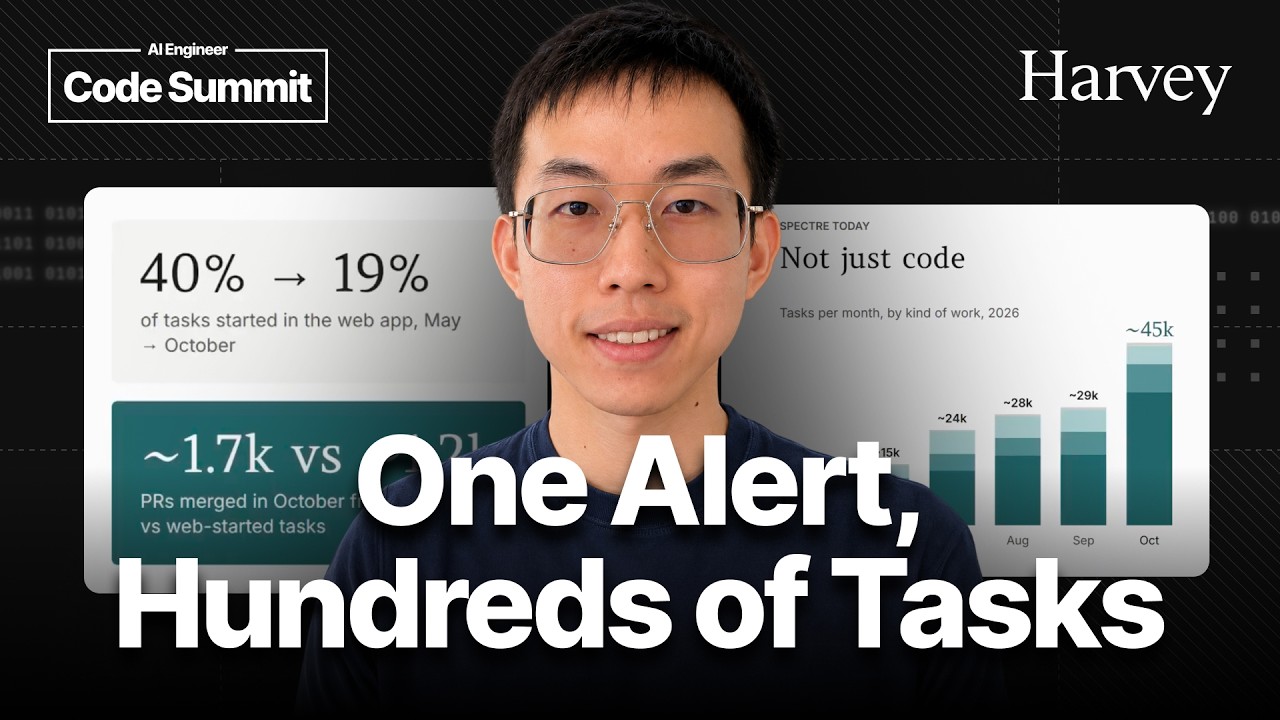
Joey Wang describes the same pressure at Harvey later in the year and says his team hasn't solved it. At the end of October, PRs across the company jumped about 60% in one month, merges that took 15 to 30 minutes took over an hour, and the merge queue kept having to be switched off. He doesn't attribute the jump to agents alone.
Duolingo's case is of a different kind. Kush Agrawal's team built agents that write unit tests, and once they ran in production there were tens to hundreds of generated PRs open, more than anyone could manage by hand. The answer was a workflow that takes one action per PR every few hours: fix CI, assign a reviewer or close a stale PR. CI time became, in his words, an increasingly scarce resource. Every one of the more than 700 merged PRs was approved by a person.
Eugene Yan (Anthropic) describes the same shift in security work, where the output is findings rather than code. Scanning more than 1,000 open-source repositories, Anthropic had about 23,000 candidate vulnerabilities, 6,200 of them rated high or critical; at the time of the update about 1,600 had been reported to maintainers and about 100 patched upstream. That gap is a snapshot of ongoing work, not a measured backlog, but Yan draws the conclusion himself: finding vulnerabilities is now straightforward, and the slow steps are verification, triage and patching. Several teams told him that sending product engineers every true finding, medium and low severity included, cost them those engineers' trust, and he calls engineer attention the scarce resource. At hundreds of findings a month, his advice is to route each one to the code or service owner without an LLM and to agree on severity once, in writing.
The four agree on the direction: when agents produce more, the cost shows up downstream, in queues, CI, reviewers and triage. They aren't measuring the same thing, though. Uber and Harvey count company-wide merge traffic, where agent and human changes are mixed and not separated. Duolingo counts PRs from one agent it built and controls, so it could also slow the source down. Anthropic counts findings in other people's code, where the people who must act, open-source maintainers, are outside the team. The responses differ too: Uber accepted some untested combinations to keep throughput, Duolingo kept a human approval on every PR, Yan recommends cutting what reaches engineers through severity rules and plain routing, and Harvey has no answer yet.
What holds across the four is that a team adopting agents should watch downstream numbers, such as time to land, queue length, CI time, review load and open findings, alongside the count of PRs or findings. What doesn't hold: none of the code cases reports defect rates, reverts or incidents before and after, so we can't say whether Uber's trade-off or Duolingo's caution changed quality, and none gives the cost of the extra capacity. Other talks at the event, from AWS's Doug Clauson and Armin Ronacher, make related points about review and attention with a different kind of evidence, so we leave them out of this comparison.
What they found
From the talk. Figures are self-reported unless stated.Uber's merge queue went from about 90 requests an hour in January 2026 to 130 in March, and p95 land time from about 30 minutes to three or four hours, with the trunk kept green.
Self-reported by Uber. The speakers attribute the growth primarily to AI-generated changes, without a breakdown.
Measured resultPreetam Dwivedi, Manjari Akella · Uber
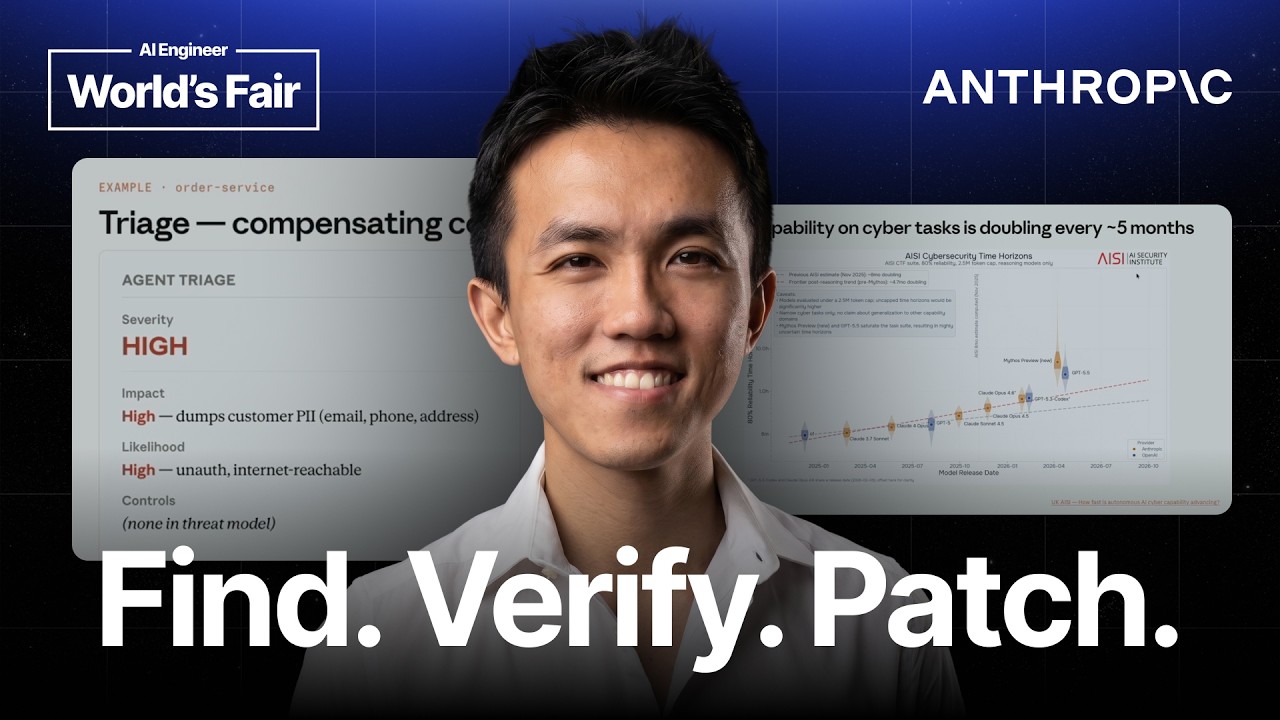
6:18Scanning more than 1,000 open-source repositories, Anthropic had about 23,000 candidate vulnerabilities, 6,200 rated high or critical; at the time of the update about 1,600 had been reported to maintainers and about 100 patched upstream. Yan says the bottleneck has shifted to verification, triage and patching.
Self-reported by Anthropic, which sells a scanning product (named at 20:30). A snapshot of ongoing work, so the gap between findings and patches is partly timing. The bottleneck remark is at 3:40.
Measured resultEugene Yan · Anthropic
2:52At the end of October, PRs across Harvey jumped about 60% in a single month, merges that took 15 to 30 minutes took over an hour, and the merge queue kept being switched off.
Reported by Harvey's dev platform team; not attributed to agents alone.
Measured resultJoey Wang · Harvey
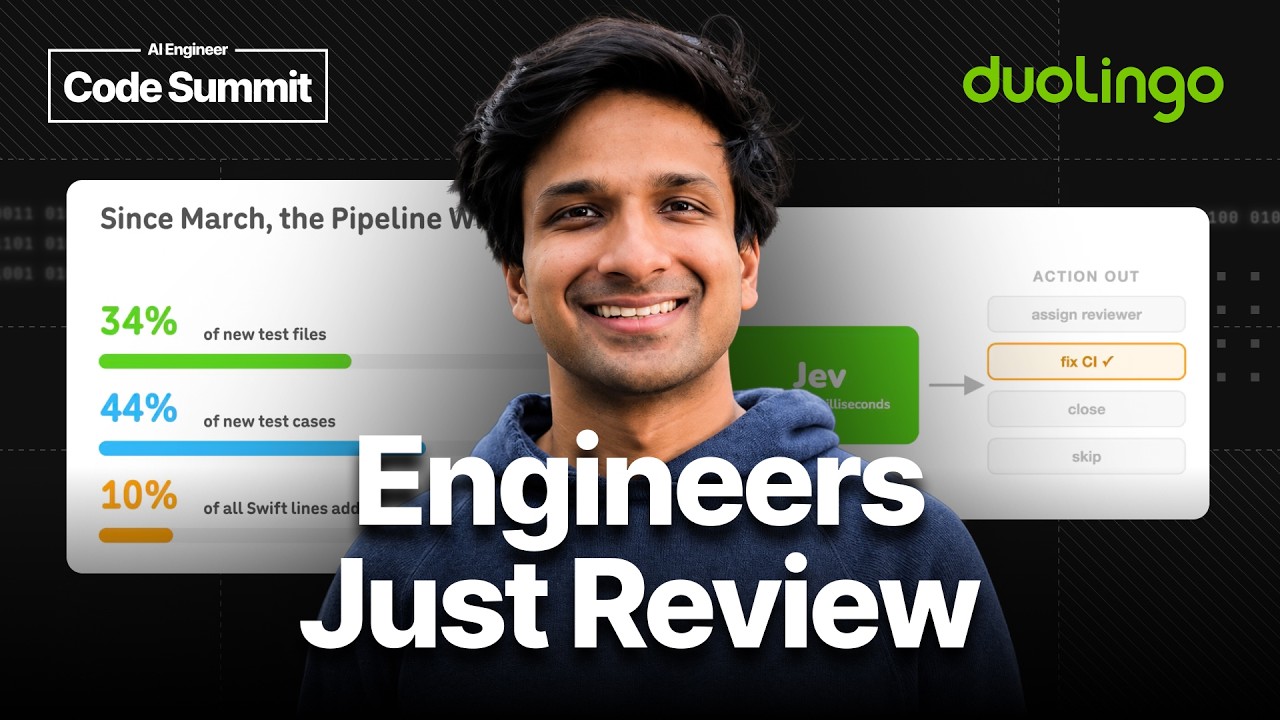
9:54Once its test-writing agents ran in production, Duolingo had tens to hundreds of open generated PRs, so it built a workflow that takes one action per PR every few hours: fix CI, assign a reviewer, close stale ones.
Duolingo's iOS test pipeline. Every merged PR was approved by a person.
Case studyKush Agrawal · Duolingo
7:12
Why it matters
Our reading. Not said in the talk.Reported gains from agents usually count what was written, found or merged. In these talks the cost appears later, in queue time, CI capacity, reviewers and triage. Our reading is that a team judging an agent rollout needs those downstream numbers too, along with the defect and cost figures none of these speakers reported.
What one could try
- Track p95 time from PR opened to landed and the length of the merge queue alongside PR counts, which is how Uber and Harvey saw the problem.
- If agents open PRs in bulk, give those PRs a process of their own: capped fix attempts, automatic closing of stale ones and a named reviewer.
- If agents produce findings or reports rather than code, agree on severity rules and owners before raising the volume, and route findings to owners with plain rules, as Yan advises.
Limitations
- An editorial comparison of four talks: merge-queue metrics at two companies, one team's pipeline and one security programme. All figures are self-reported.
- No talk separates agent and human changes, or reports defects, reverts or incidents before and after.
- None gives the cost of the extra downstream capacity in CI, tokens or reviewer hours.
- Anthropic's figures describe its own scanning work, and it sells a scanning product; the gap between findings and patches is a snapshot, not a rate.
Original sources

AI Engineer CODE Summit 2026 · Nov 12, 2026
Green Pull Requests Can Still Break the Trunk
Preetam Dwivedi, Manjari Akella · Uber · 28 min
AI Engineer CODE Summit 2026 · Nov 11, 2026
The harness has to finish the job
Joey Wang · Harvey · 13 min
AI Engineer CODE Summit 2026 · Nov 11, 2026
Duolingo's Test-Writing Agent Is a Pull-Request Lifecycle, Not a Prompt
Kush Agrawal · Duolingo · 13 min
AI Engineer World's Fair 2026 · Jul 17, 2026
Using LLMs to Secure Source Code
Eugene Yan · Anthropic · 22 min
This is our synthesis of the talk, checked against the transcript at the linked moments.