Nik Pash says Cline's RL verifiers should check the outcome and ignore how it was reached
Nik Pash describes how Cline turns real user coding sessions into containerised benchmark and training tasks. The verifier should check the result the user wanted, he says, not the steps of the human fix it was built from.
 Watch from 5:44
Recording by AI Engineer.
The idea
The speaker’s argument, in our words.Pash's view is that harness tweaks no longer move models much, and that progress comes from hard environments labs train on. Cline builds them from real user sessions, rebuilding the before and after states of a real fix in a container. The verifier is the part he calls an art. His analogy is a kettle whistle: it signals boiling water however it was heated. A verifier written by a sub-agent from the human fix can end up checking incidental details, like which burner was used or how long it took, and those tests punish valid alternative solutions.
What they found
From the talk. Figures are self-reported unless stated.Sub-agents qualify each session: does the repository and starting commit exist and is it open source, what was the user trying to do, and is there a real commit or PR that fixed it; trivial or vibe-coded tasks are discarded.
Cline's own pipeline, described by its head of AI; acceptance rates not given.
Case study
6:38Rebuild the before and after states, document every dependency and package the task in Docker with Git removed so the agent cannot reward hack.
Part of the same pipeline; no examples of hacks prevented are given.
Technical recommendation
8:09Verify the outcome the user wanted; do not over-prescribe from the ground-truth fix.
Illustrated with a kettle analogy, not with a real verifier.
Technical recommendation
8:48
Why it matters
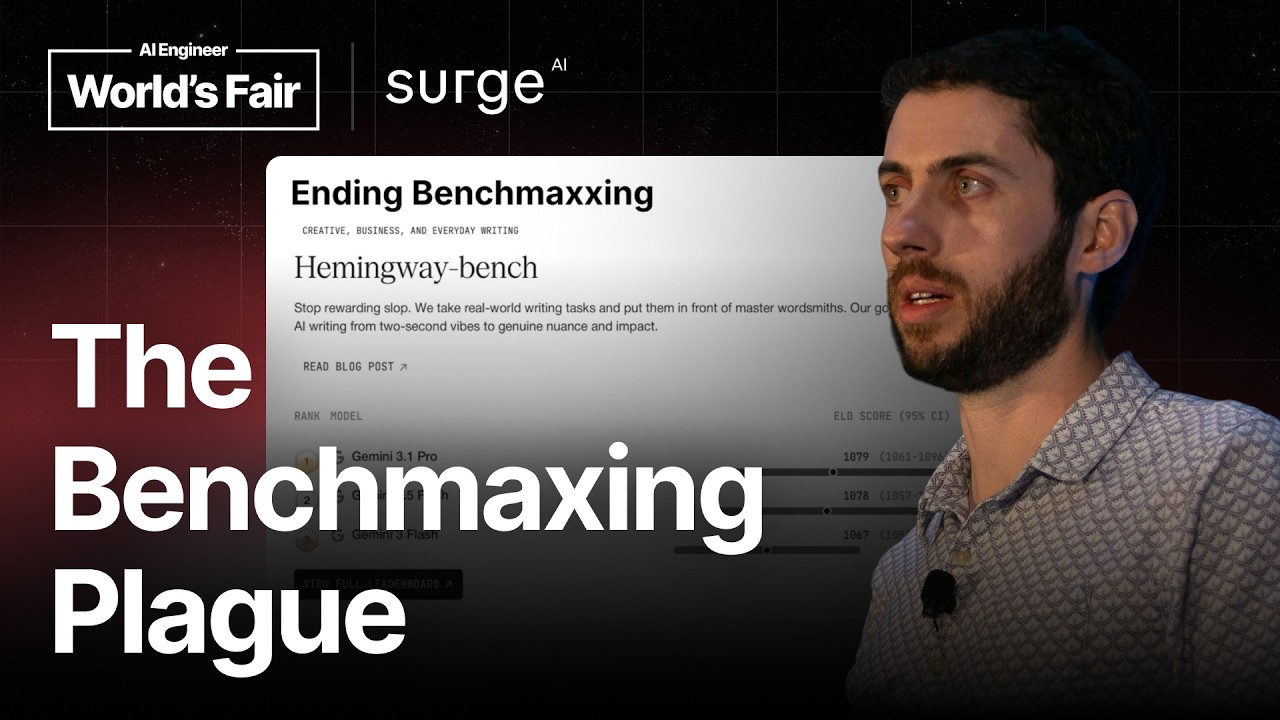
Our reading. Not said in the talk.Teams building evals from their own incidents face the same choice between testing the outcome and replaying the human fix. Nick Heiner (Surge AI) shows the over-prescription failure in a public benchmark: a verifier that accepts one phone-number format the prompt never asked for. And Nebius found that removing future Git history was not enough: Claude Code then looked the fix up on the web, and then through curl.
What one could try
- When turning a past bug into an eval, write the check against the behaviour the user needed, and test it against at least one alternative correct fix.
- Remove version-control history and other answer leaks from eval containers.
Limitations
- No numbers on how many tasks qualify, how verifiers are validated or how ClineBench tasks score.
- Cline announces ClineBench in the same talk, so the account is also a call for contributions to its benchmark.
- Pash says building an environment went from about 16 hours to under 20 minutes per task (10:17), but not what was automated or how quality is checked at that speed.
Original sources
AI Engineer Code 2025 · Dec 12, 2025
Hard-Won Lessons from Building Effective AI Coding Agents
Nik Pash · Cline · 14 min
This is our synthesis of the talk, checked against the transcript at the linked moments.