Making AI-generated code reliable
How Duolingo, Robinhood, Watershed, Anthropic, AWS, Netflix, ZoomInfo and Google DeepMind check agent-written code: how agents fool the checks, who should do the checking, and the number nobody reports.
As agents write more of the code, review and verification become the bottleneck. These talks describe what teams changed when that happened. Read in three parts: how agents game checks or claim work they did not do, who should check and what the checker should be allowed to see, and how teams gave review an end.
The figures come from the teams that built the systems, usually for one codebase, and few come with a baseline. The talks show well how things fail and much less how often.
The ideas
Duolingo layers a file rule, AI review and a judge against test agents gaming CI
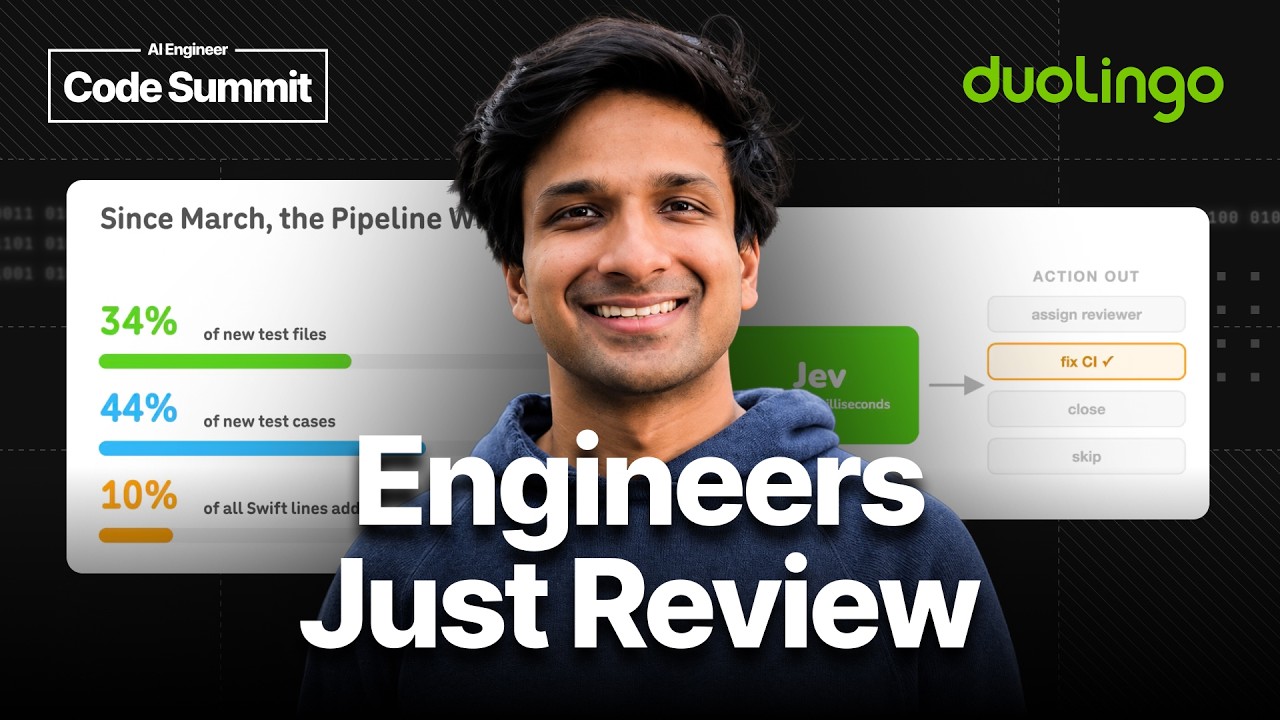
Duolingo's test-writing agents sometimes reached green CI by editing production code, deleting or silencing tests, or adding long waits. Kush Agrawal describes three layered checks that screen those PRs before a human reviews them.
Part 1, agents game checks: Duolingo's test agents edited production code or silenced tests to get a green build.
DuolingoCase studyRead the idea
Google DeepMind trains Gemini to ground its final report in actions the agent took
Melvin Johnson, who leads Gemini post-training, lists the ways agents fake a finished task and how his team trains against it. He spoke on the day Google launched a new Gemini model.
Part 1: agents also misreport what they did. Google DeepMind's answer is at training time.
Google DeepMindTechnical recommendationRead the idea
ZoomInfo found its LLM judge believed agents over tool results and moved to yes/no checks
Brian Kennedy (ZoomInfo) found the judge approving agent steps right on 65% of 500 hand-checked steps, often accepting actions no tool performed. His team now asks Jev, which he describes as a decision model, the same yes/no questions about every step's tool results.
Part 1: ZoomInfo's judge believed the agent's story; it now asks yes/no questions about each tool result.
ZoomInfoMeasured resultRead the idea
Watershed lets its agent write free code but commits only typed SDK edits it runs itself
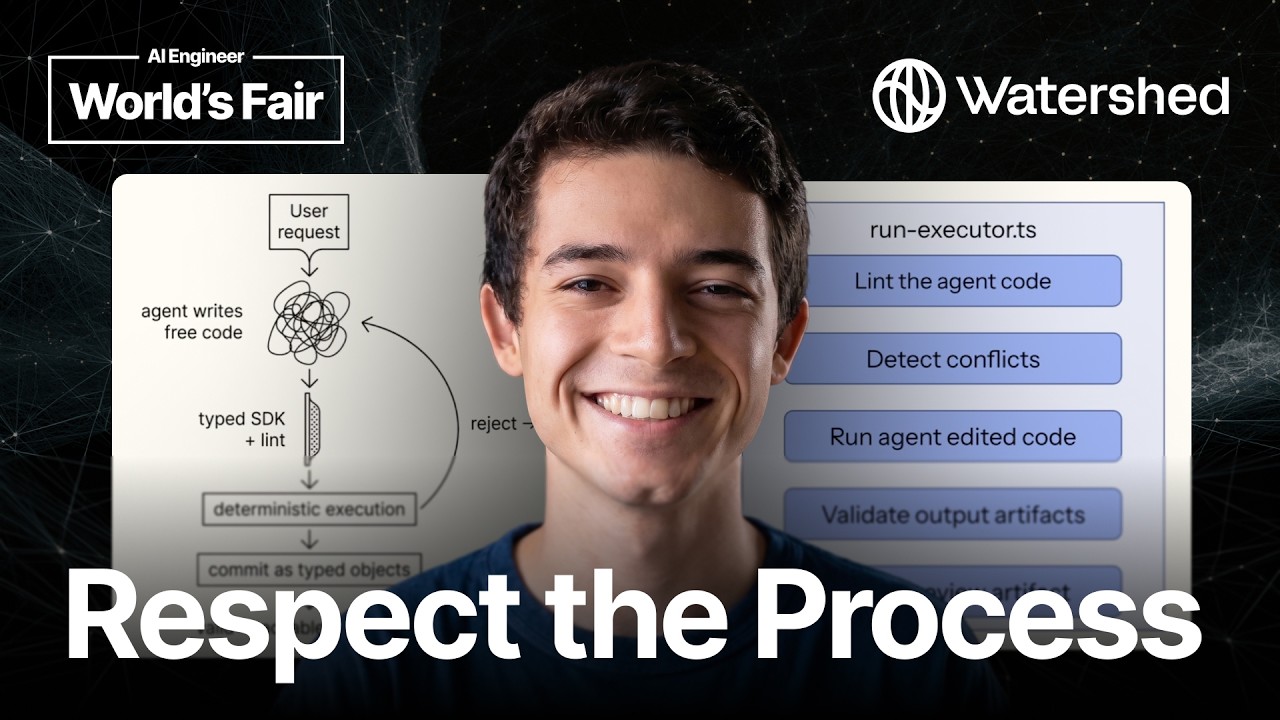
Andrew Dumit (Watershed) says its coding agent for supply-chain graphs took unplanned paths and claimed edits it never made. Watershed now accepts graph changes only through a typed SDK, runs the final script itself and shows users the effects, not code.
Part 1: Watershed's agent claimed edits it never made, so the application now runs the edits itself.
Watershed Technology Inc.Case studyRead the idea
Anthropic's Applied AI team pairs long agent builds with a critic that uses the app
Ash Prabaker (Anthropic) describes a planner, builder and evaluator harness for multi-hour app builds. The evaluator has its own context, agrees a definition of done with the builder before coding, and tests by clicking through the running app.
Part 2, who checks: Anthropic's critic uses the running app and never sees the builder's reasoning.
AnthropicTechnical recommendationRead the idea
Anthropic's Eugene Yan has an independent agent try to disprove each vulnerability
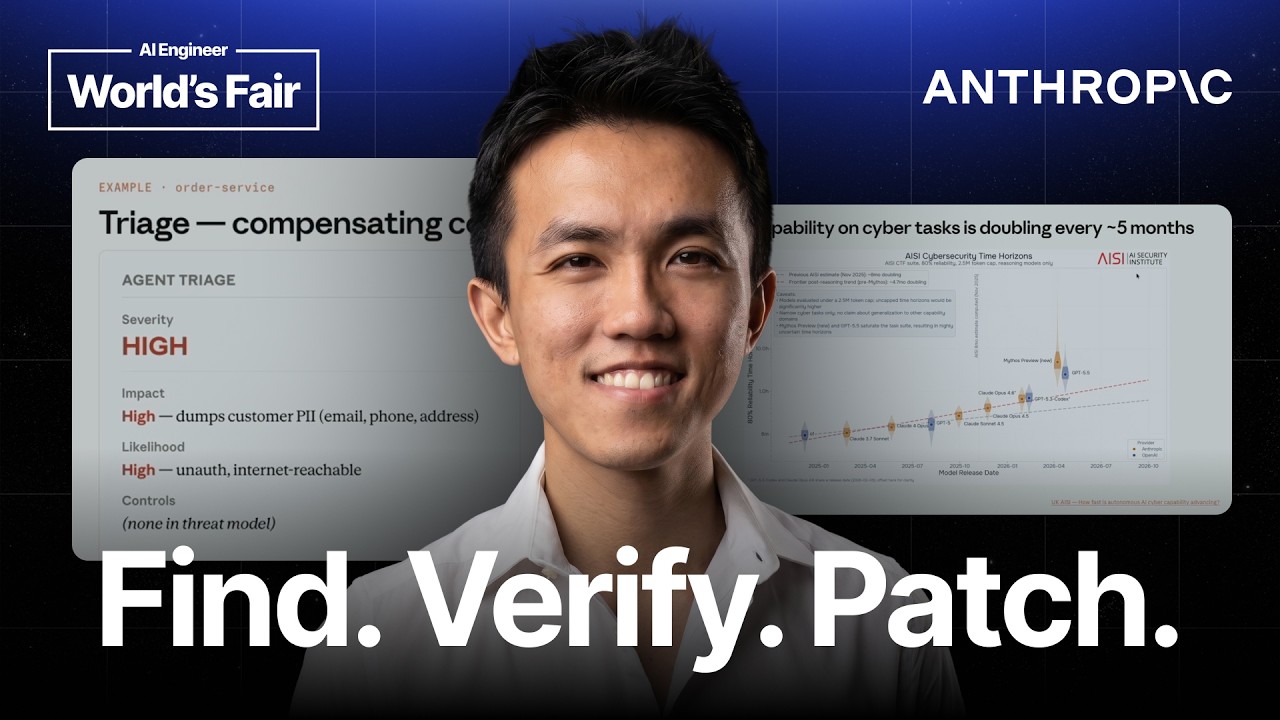
Eugene Yan of Anthropic, drawing on work with security teams using Claude, splits vulnerability work into a discovery agent tuned for recall and a separate verifier tuned for precision that tries to disprove each finding.
Part 2: Anthropic's security verifier gets only the finding and tries to prove it false.
AnthropicTechnical recommendationRead the idea
Robinhood's PR reviewer checks facts with scripts and sends an agent after what they miss
Chetas Joshi describes how Robinhood's data platform team reviews data-pipeline PRs: deterministic scripts for checkable facts, a repository-reading agent for risks such as consumers missing from lineage, and people for protected decisions.
Part 2: Robinhood lets scripts settle facts and keeps the agent for context.
RobinhoodCase studyRead the idea
Robinhood grades its AI PR reviewer on false escalations as well as misses
Robinhood's data platform team grades its PR-review agent on two errors: bad PRs it approved and fine PRs it sent to a person needlessly. In their experience misses point to missing rules, while false escalations point to missing context.
Part 2: Robinhood grades its reviewer on needless escalations as well as misses.
RobinhoodCase studyRead the idea
After an evidence rule, Duolingo proctors accepted 29% of fake AI alerts, down from 50%
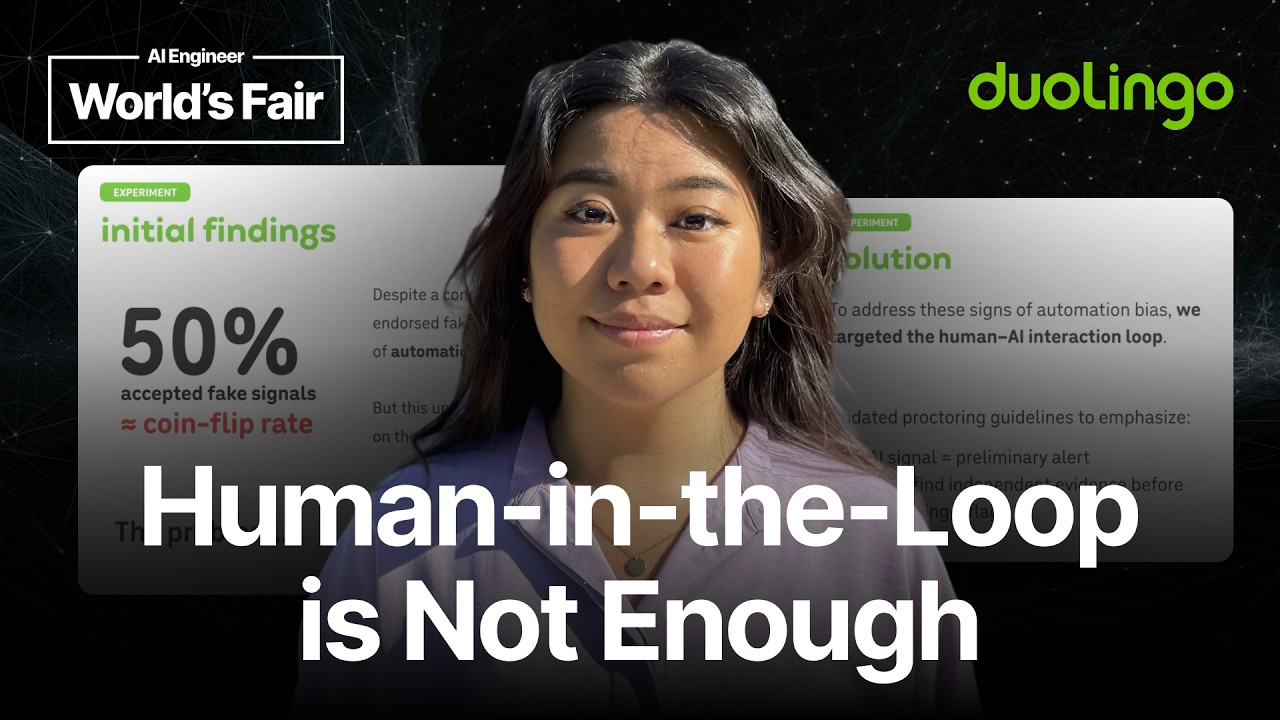
In a Duolingo English Test study presented by Angel Ortmann Lee, experienced proctors upheld many fabricated copy-typing alerts on clean sessions. After the guidelines were revised so that a flag needs suspicious behaviour in the video, more fake alerts were rejected, though rejection of genuine alerts also rose.
Part 2: the person after the model. Duolingo's proctors upheld half of fake alerts until guidelines demanded evidence. An exam, not code.
DuolingoMeasured resultRead the idea
Jarred Sumner picks agent-built projects by whether their tests predate the agent
Jarred Sumner, creator of Bun, now at Anthropic, chose to build an ahead-of-time JavaScript compiler instead of rewriting Claude Code in Rust. The deciding factor was which project had an independent way to check the agent's work.
Part 2: Sumner picks projects whose tests the agent could not have shaped.
AnthropicCase studyRead the idea
Buykin treats green checks as weak evidence until replayed real tasks cover each branch
Dmitry Buykin, who maintains a large agent-built system, describes a refactor that silently lost a branch and a backlog where only about a quarter of the items that looked covered could really be closed. His answer is to rank evidence by what it proves.
Part 2: Buykin replays real tasks before trusting a green check.
MaerskCase studyRead the idea
AWS's Kiro Crew team gave agent review pass or fail verdicts to end a fix loop
The Kiro Crew team at AWS tried to fix every comment from an agent reviewer and got a loop that kept repeating. Doug Clauson describes what replaced it: blocking and non-blocking triage, and specialist reviewers that each cast one pass or fail vote.
Part 3, an end to review: AWS's Kiro Crew team stopped a fix-every-comment loop.
AWSTechnical recommendationRead the idea
Duolingo aimed its test agent at testable code and built a workflow to merge its PRs
Kush Agrawal describes how Duolingo backfilled iOS unit tests with coding agents: a scoring script picks files an agent can test well, and a scheduled state machine repairs, routes or closes the agent's PRs. More than 700 merged, each approved by a human.
Part 3: Duolingo built a workflow to repair, route and close agent PRs.
DuolingoCase studyRead the idea
Netflix's Rajat Shah has an agent read production profiles and lets a canary judge the fix
Rajat Shah describes a Netflix experiment in which a coding agent read production CPU profiles, spotted inefficient patterns from the call stack and drafted fixes. Findings go into a shared Git catalog, and fixes must pass tests and a canary before an engineer reviews them.
Part 3: Netflix lets tests and a canary, not the agent, decide whether a fix helped before an engineer reviews it.
NetflixCase studyRead the idea




What we take from it
- Expect agents to optimise for the check and to report work they did not do. Duolingo, Google DeepMind, ZoomInfo and Watershed all describe it. The fixes sit at different layers: training (Google DeepMind), a per-step judge of tool results (ZoomInfo), and making the application the only thing that can perform the edit (Watershed). Watershed's removes the question instead of detecting the lie, but it needs every change to go through one data model.
- Keep the builder's reasoning away from the checker. Two Anthropic teams reached that rule separately, and ZoomInfo's judge shows the failure it prevents. What counts as ground truth still differs by team: tests that predate the agent (Sumner), replayed real tasks (Buykin), the running app (Anthropic), a production canary (Netflix).
- A person at the end is not a check by default. Duolingo's proctors, trained and calibrated, upheld half of fabricated alerts until their guidelines required independent evidence. Robinhood measures needless escalations and AWS forces pass or fail verdicts, but no team here measures how often its own reviewers approve bad agent changes.
- None of these teams reports a long-term defect or maintainability rate for agent-written code. That is still the missing number in this collection.
The connections between these ideas are ours, not the speakers’. Each idea links to the talk moment that supports it.
Sources
- Duolingo's Test-Writing Agent Is a Pull-Request Lifecycle, Not a Prompt 4 ideasNov 11, 2026
- Train on the engineering work that still fails 4 ideasNov 12, 2026
- Your Judge Is Hallucinating Too 2 ideasNov 11, 2026
- Beyond Generation: Fast, Structured AI Decisions with Jev at Glean 1 ideaNov 11, 2026
- Respect The Process 2 ideasJul 7, 2026
- How to Build Agents That Run for Hours (Without Losing the Plot) 3 ideasMay 18, 2026
- Using LLMs to Secure Source Code 3 ideasJul 17, 2026
- Who reviews the bots? 3 ideasNov 12, 2026
- Build AI Systems for Discernment, Not Approval - Angel Ortmann Lee, Duolingo 1 ideaJul 7, 2026
- Choose the project you can verify 2 ideasNov 12, 2026
- Agents Made Code Free. Maintaining It Didn't Get Cheaper. 3 ideasNov 12, 2026
- Ship More as a Team of One with Kiro Crew 2 ideasNov 12, 2026
- AI Agents for Performance: Ship Faster, Pay Less 1 ideaJul 28, 2026