What a coding agent's harness is worth when the model changes
Five teams changed the harness or the environment around a coding agent, and three describe what happened when the model underneath changed. What expired, what lasted, and how teams decide what to delete.
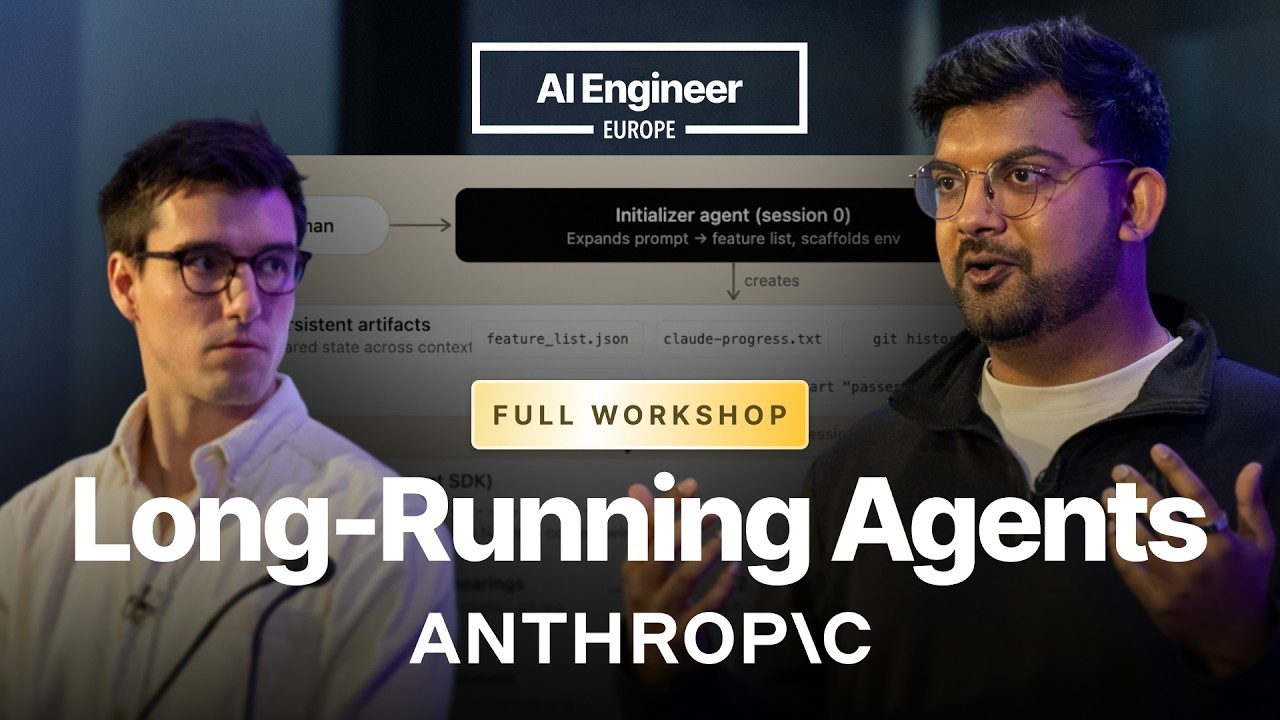
The question behind this collection is how much of a coding agent's improvement comes from the harness around the model, and how long that improvement lasts when the model changes. No talk here runs harness and model combinations on the same tasks. Each team changed one part of its own setup and reported what it saw.
Philipp Schmid (Google DeepMind) found that four harnesses scored about the same while cost per task did not, and that a bash-only harness saved tokens only with a model that batched its edits. Armin Ronacher (Earendil) kept his harness unchanged for a year and watched its behaviour change with each model. Anthropic's Applied AI team removed context resets and sprint-by-sprint building once a newer model held a two-hour build. Schmid also recommends running each skill eval with the skill switched off, to know when a model no longer needs it.
Cognition and Lovable invested in what sits outside the model altogether: an app an agent can run and test, and a history the prompt is rendered from. Neither describes having to redo that work when the model changed.
The ideas
In Schmid's harness tests, cost per task varied far more than accuracy
Philipp Schmid (Google DeepMind) ran four coding-agent harnesses over about 350 tasks: scores were roughly equal, cost per task was not. In his demos, a bash-only harness saved tokens with a newer model that batched edits into one script, and nothing with an older one.
Removing harness pieces: in Schmid's tests cost moved, accuracy didn't, and the saving depended on the model.
Google DeepMindMeasured resultRead the idea
Armin Ronacher's unchanged harness behaved very differently after model upgrades
Armin Ronacher of Earendil analysed his own sessions with the Pi coding agent, whose core tools have not changed in a year. With newer models he corrected and aborted the agent less, and the 90th-percentile run time per task rose from about 2.5 minutes to 14 or more.
The opposite experiment: same harness for a year, different behaviour with each model. One person's sessions.
EarendilMeasured resultRead the idea
Anthropic engineers dropped context resets and sprints once a model held a two-hour build
Two Anthropic talks describe harness pieces added for one model generation becoming overhead in the next. Ash Prabaker's team dropped context resets, sprint-by-sprint building and per-sprint evaluation, and decides what to remove by reading full traces.
Anthropic deleted scaffolding a newer model no longer needed and decides what to cut by reading traces. Its two talks disagree on which model generation made the change.
AnthropicCase studyRead the idea
Google DeepMind merges a skill change only if its evals improve or new evals are added
Philipp Schmid describes how Google DeepMind tests agent skills with small eval suites that run on every change to a skill. He also recommends running each eval with the skill disabled, to know when the skill can be retired.
Schmid recommends running each skill eval with the skill disabled, to see when the model has learned what the skill taught.
Google DeepMindCase studyRead the idea
Cognition made its whole app run on one VM with mocks so agents can test unattended
Walden Yan, co-founder and CPO of Cognition, says the hard part of letting agents take bugs from report to merge was infrastructure. Cognition put every service, with mocked third parties, in one VM per agent, rebuilt from the latest code every hour.
Cognition's answer is the environment: an agent that can run the whole app can check its own work.
CognitionCase studyRead the idea
Lovable stores each agent's full history as an event log and renders prompts from it
Lovable CTO Fabian Hedin describes an agent runtime built on an append-only, Git-like task history kept separate from both the prompt and the running process. It lets agents fork, switch models and keep working through about 700 deploys a day.
Lovable keeps history apart from the prompt, which is what lets its agents switch models mid-task.
LovableTechnical recommendationRead the idea

What we take from it
- Google DeepMind, Anthropic and one independent developer describe the same coupling: a harness piece that helps one model is neutral or in the way with the next. The accounts are qualitative or from one person's sessions, but together they say a harness has to be retested at each model upgrade, not carried over.
- Teams find the dead pieces differently. Anthropic reads full traces by hand; Schmid recommends rerunning evals with a skill switched off and retesting the harness, including removing most of it, whenever a model ships. Nobody compared the two methods or said how often each finds something to delete.
- Anthropic's own two talks disagree on which model generation stopped needing context resets. That is a small detail, but it shows how hard it is to date these changes even inside one lab.
- Cognition's test VM and Lovable's history are the only investments here that no speaker says had to be redone after a model change. That is our reading, not something either team measured.
- Still missing: the same tasks run across harness and model combinations, and the cost of keeping a harness current.
The connections between these ideas are ours, not the speakers’. Each idea links to the talk moment that supports it.
Sources
- I deleted 90% of my harness (And It Got Better) 2 ideasNov 11, 2026
- Earning Autonomy: From Missions to Workstreams 2 ideasNov 11, 2026
- The Software Atelier 3 ideasNov 12, 2026
- How to Build Agents That Run for Hours (Without Losing the Plot) 3 ideasMay 18, 2026
- Anthropic's Applied AI team on the Evolution of Agentic Surfaces 3 ideasAug 11, 2026
- Don't Ship Skills Without Evals 2 ideasJul 14, 2026
- A New Age of Software Engineering 1 ideaNov 12, 2026
- What it takes to set intelligence free 1 ideaNov 11, 2026